
Meta Is Fighting Secret Recording on Its AI Glasses—but the Privacy Debate Is Not Over
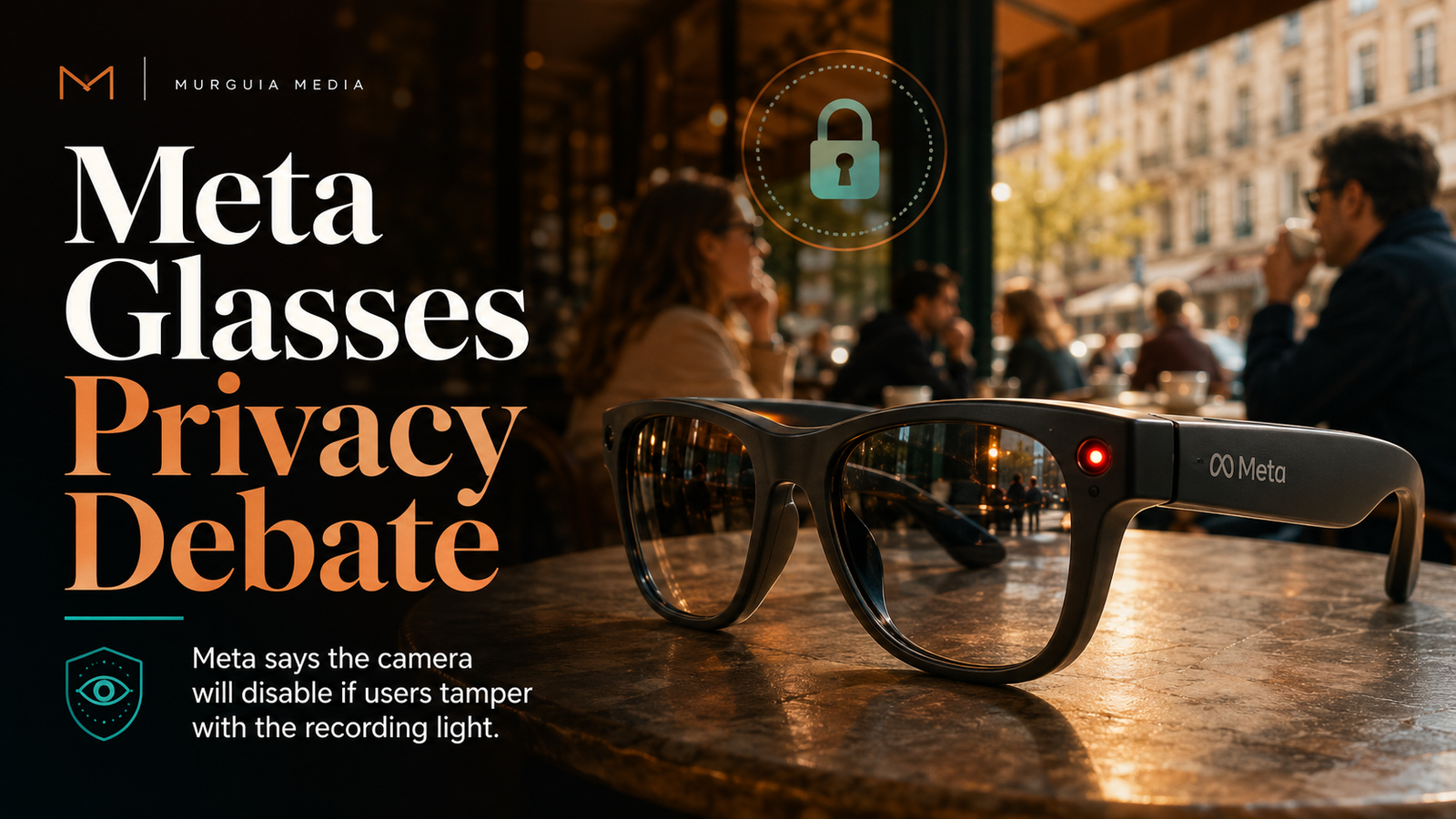
Meta says it will disable the camera when users attempt to cover, damage, or tamper with the recording indicator on its AI glasses.
As smart glasses become more common, one question is becoming increasingly important: How can someone nearby know when they are being recorded?
Meta’s answer is a small white light built into the front of its AI glasses. The company calls it the capture LED. It flashes briefly when a photograph is taken and continues blinking while video is being recorded or streamed. Meta says the light has no off switch because it is intended to alert people nearby that the wearer is actively capturing content.
But some users have attempted to cover, alter, or destroy that light so they could record without drawing attention.
Meta is now responding more aggressively.
Beginning with its second-generation glasses, covering the capture LED automatically disables the camera. Meta says it is also updating the glasses to detect when the light has been physically altered or destroyed. When tampering is detected, the camera will remain disabled until the problem is corrected.
The company also says it is removing advertisements, posts, and Marketplace listings that promote services designed to defeat the recording light. Meta has warned that accounts associated with these services may be banned and that it may pursue additional action against businesses helping users bypass the safeguard.
Meta Wants Recording to Be Visible
The purpose of the light is clear: people should not be able to transform ordinary-looking glasses into a hidden recording device.
Meta advises wearers to tell people when they are about to record, stop when someone asks not to be photographed, and turn the glasses off in sensitive locations such as medical offices, locker rooms, public restrooms, schools, and places of worship.
That is a responsible approach, but the safeguard is not perfect.
A small light can be difficult to notice, particularly outdoors or when someone does not already know what the light means. Unlike a person holding up a phone, someone wearing AI glasses may appear to be doing nothing more than looking in another person’s direction.
The light also warns that recording is occurring. It does not automatically mean the person being recorded has agreed to it. Recording and consent laws vary by location, especially when private conversations or places with a reasonable expectation of privacy are involved.
Instagram Is Also Responding to Misuse
The privacy controversy has grown because some creators have used Meta glasses to secretly record strangers for prank and pickup-style videos.
Instagram head Adam Mosseri recently said the platform would remove content that uses secret recordings to exploit or harass people. Business Insider reported that at least two large accounts built around this type of content had been deactivated, and Meta confirmed the accounts were removed for violating its harassment policies.
This is an important distinction.
Meta is not announcing that all footage recorded in public with its glasses is prohibited. It is targeting content involving harassment, exploitation, or deliberate attempts to secretly record people while defeating the product’s privacy safeguards. Exactly how the policy will be enforced across millions of videos remains unclear.
The Privacy Question Is Bigger Than One Light
There is also a detail consumers should understand.
Meta says the capture light continues to indicate when photographs or videos are being saved or streamed. However, the camera may also be used for certain AI-assistance features without the LED remaining on. Meta says that in those situations it applies safeguards such as removing key identifying information.
That means the privacy debate will not be resolved by one blinking light.
Smart glasses can provide meaningful benefits. They allow hands-free photographs, navigation, translation, accessibility assistance, audio, and quick access to AI. But their ordinary appearance also makes recording less obvious than it is with a phone or traditional camera.
Meta deserves credit for making the camera stop working when the recording indicator is deliberately defeated. A person should not be able to purchase ordinary-looking glasses, hide the warning light, and quietly transform everyone nearby into content.
But technology can only go so far.
The wearer still has a responsibility to respect other people. Platforms must remove abusive content. And the public needs to understand that a light signals recording—it does not replace courtesy, consent, or the law.
Meta is making secret recording more difficult. The larger question is whether society is prepared for a world in which nearly anyone could be wearing a camera.