Sourcing Smart: New Condition, Genuine Brands, and Regional Differences
Where your inventory comes from matters just as much as where it ends up. Get sourcing wrong and everything downstream — your listings, your reputation, your ability to keep selling on a platform at all — gets shakier.
New Condition, Genuine Brands, No Exceptions
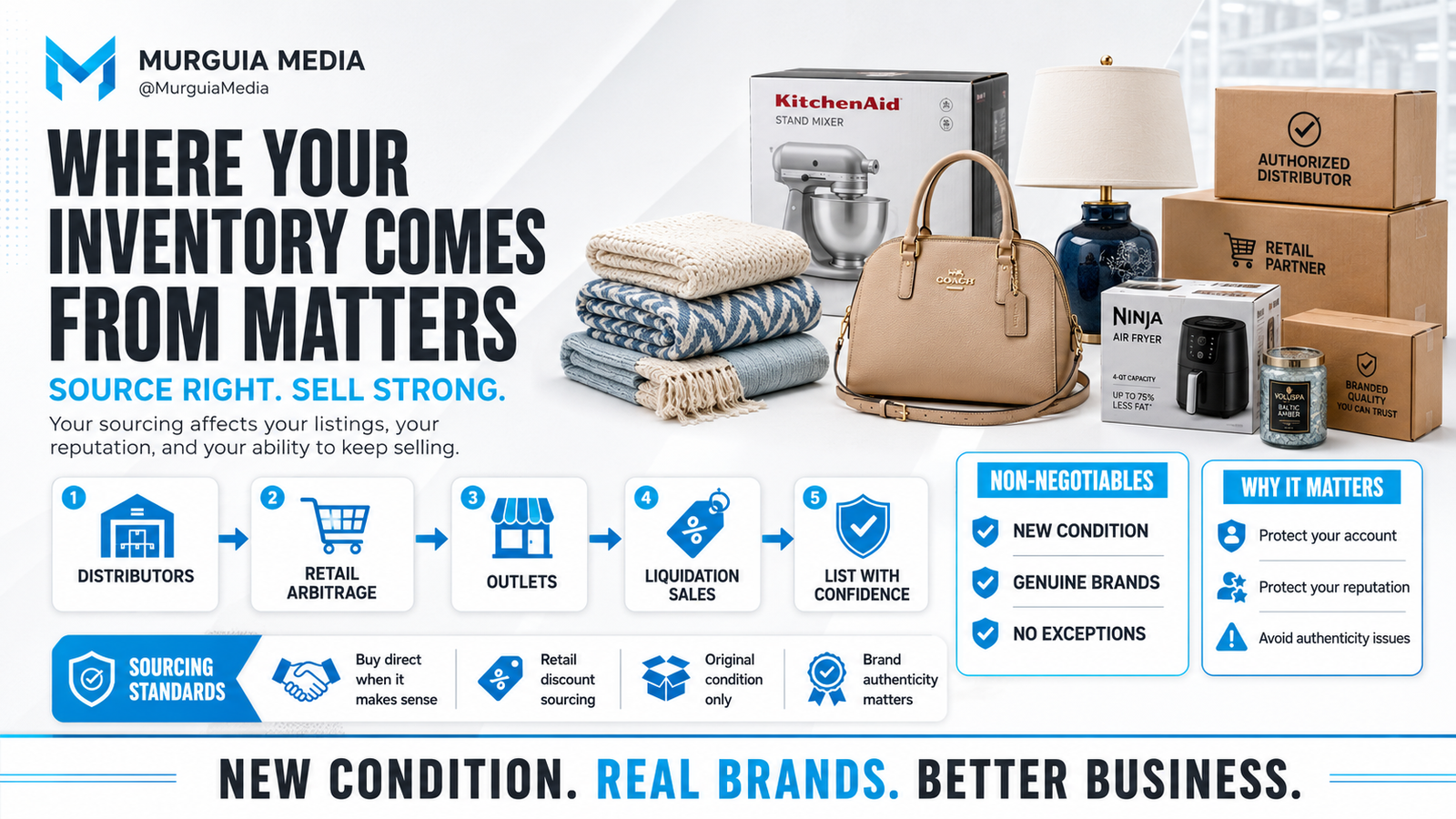
I don’t resell used items. If I come across something used that I want to pass along, I give it away — I don’t put my business behind it. Everything I list has to be new condition and genuinely the brand it claims to be. That’s not just about doing right by the buyer. It’s about protecting your own account and reputation on whatever platform you’re selling through. Getting flagged for authenticity issues can cost you far more than one bad sale.
Where I Actually Source From
I buy from main distributors directly when that makes sense. I also do retail arbitrage — buying items at a genuine discount from retail stores, outlets, and liquidation sales, then reselling them. The condition has to hold up to the same standard either way: new, in original condition, actually the brand it says it is.
Regional Differences Most Resellers Never Think About
Here’s something that surprised me when I really paid attention to it: what’s available to source varies a lot by region, and that shapes what you can build a business around depending on where you live. Dollar Tree isn’t on the East Coast the way it is here. 99 Cents Only, before it closed, wasn’t there either. Every region’s retail supply chain is different, because the demand is different. You’re not going to find the same winter gear selection at a Walmart here that you’d find at one further north or on the East Coast, because there’s no local demand driving that inventory.
Know what’s actually available where you are, and don’t assume a sourcing strategy that works in one part of the country automatically works in yours.
Protecting Yourself From Shipping Fraud
This is something nobody warns new resellers about, and it needs to be said plainly: there are buyers who will lie about a package never arriving, even when the carrier confirms delivery with a signature. UPS and FedEx tracking and delivery confirmation exist for a reason — use them, keep records, and don’t assume every delivery dispute is legitimate. Some of them simply aren’t, and you need to be able to prove your side.
Where This Leaves You
Source from places that let you guarantee new condition and genuine branding, every time. Pay attention to what’s actually available in your region instead of assuming a national strategy applies everywhere equally. And protect yourself with delivery confirmation and records, because not every buyer claim is honest.
Next in this series: what you can actually ship, what changes that answer, and why that decision isn’t always just about the item itself.