Pricing Isn’t One Number — It’s One Number Per Platform
One of the biggest mistakes I see resellers make is pricing an item once and using that same number everywhere. That’s not how this works, and it’s leaving real money on the table.
The Same Table, Two Different Prices — On Purpose
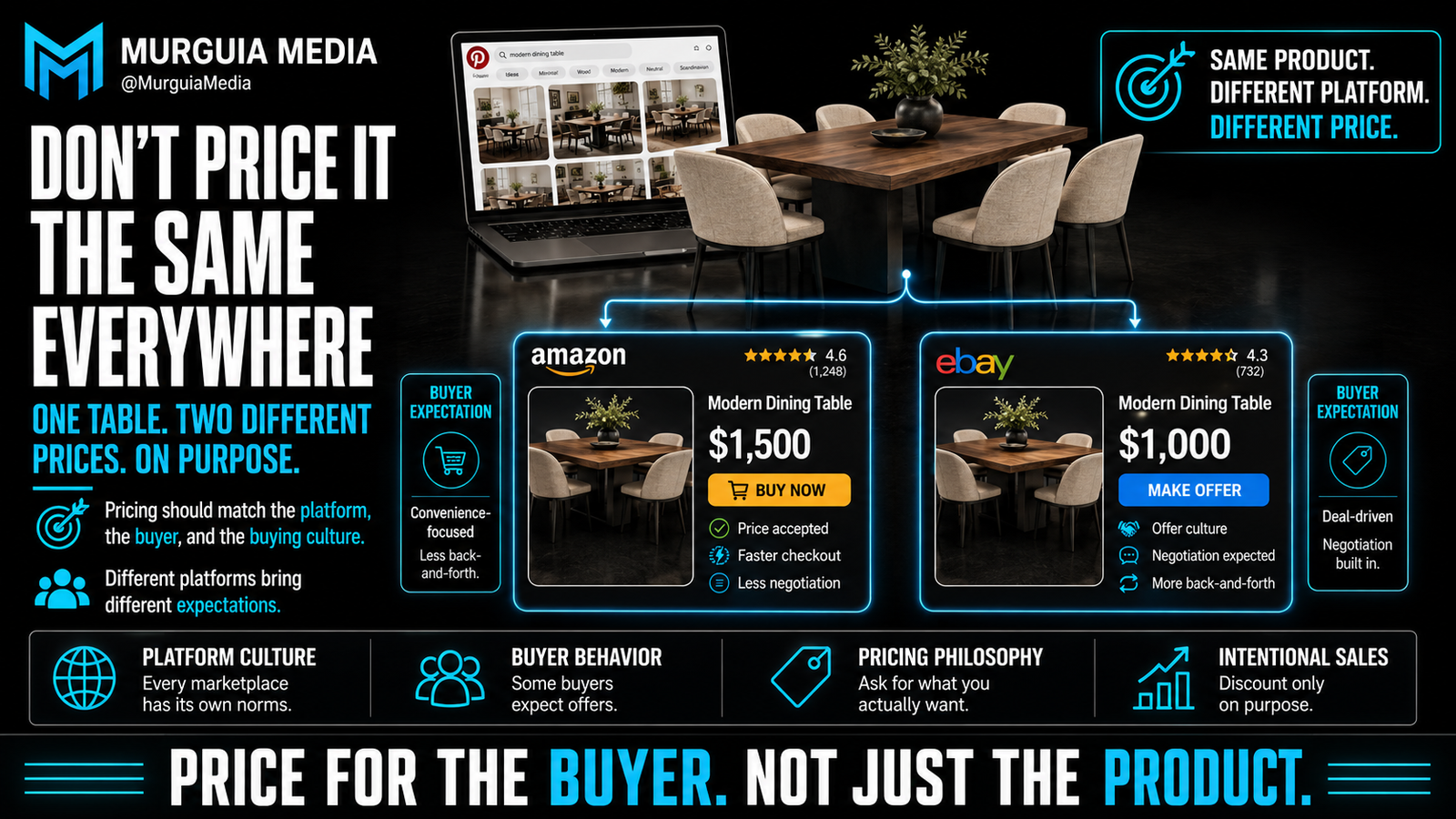
Here’s a real example from my own business. If I’m selling a dining table for $1,000 on eBay, I might list that exact same table for $1,500 on Amazon. That’s not a mistake, and it’s not me trying to overcharge anyone. It’s the market. Different platforms bring different clientele, and pricing has to reflect that.
Amazon buyers are trained to accept the price they see. There’s no back-and-forth, no lowball offers to field. eBay buyers expect some negotiation room built in. So the price on each platform isn’t just a number — it’s a reflection of who’s actually going to be looking at that listing and what they expect walking in.
Ask for What You Actually Want
I don’t discount out of insecurity, and I don’t apologize for pricing something at what I believe it’s worth. If I want a thousand dollars for a piece, that’s what I ask for. If I decide I want to run a sale, that’s a decision I make on purpose, not a reaction to someone trying to talk me down.
Certain platforms, in my experience, attract buyers looking for a steep discount — sometimes to the point where an offer feels insulting relative to what the item is actually worth. I won’t sell certain furniture pieces on platforms where that’s the dominant buying culture. Know which platforms match your pricing philosophy, not just your product.
Flash Sales Have Their Place — Used Intentionally
When I do want to move something faster, I’ll run an actual flash sale, and I’ll put it where it gets seen — usually through stories on the platforms that support them. Word gets around fast when people know a sale is real and temporary. The key is that it’s a deliberate choice, not a default response to slow interest.
Where This Leaves You
Stop treating your price as one fixed number that follows an item everywhere it’s listed. Set your price per platform, based on who’s actually buying there. Know your own worth on what you’re selling, and use sales as a tool you control, not a reflex you fall into. The margin difference between doing this thoughtfully and just picking one number can be enormous.
Next in this series: how I source inventory — where I actually find product, how I make sure it’s genuine and in new condition, and the regional differences most resellers never think to account for.