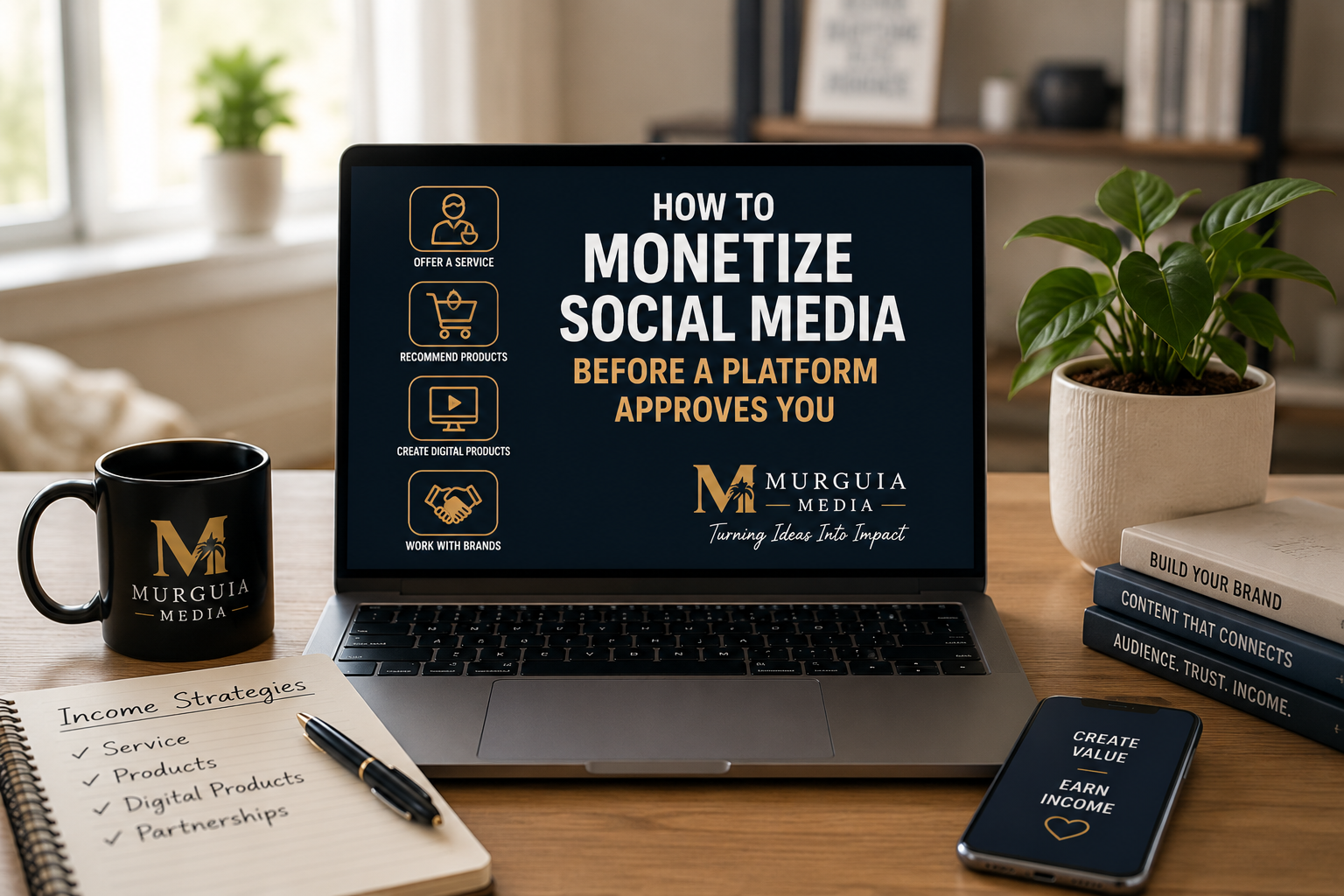
How to Monetize Social Media Before a Platform Approves You
You do not have to wait for a social media platform or advertising program to approve your account before you begin building income. Creators can turn useful content, practical skills, and audience trust into real opportunities long before reaching a major follower milestone.
By Laura Murguia
For many creators, monetization feels like a locked door. They watch their follower counts, subscriber totals, public watch hours, eligible views, and monetization dashboards while waiting for a social media platform to decide that their account is finally large enough to earn. That waiting period can become discouraging, especially after months of producing useful content without receiving any direct payment from the platform hosting it.
Platform monetization can become valuable, but it should never be the only plan. You can begin creating income before YouTube, Facebook, Instagram, TikTok, or an advertising network approves you. The key is understanding that your content does not always need to be the product itself. Content can introduce people to the services, products, recommendations, and solutions you provide.
Attention Is Not the Same as Income
Views represent attention. Followers represent potential reach. Likes, comments, and shares show that people noticed or responded to something you published. None of those measurements automatically creates revenue.
Income begins when someone who discovers your content has a clear next step to take. That step might be requesting a service, buying a product, downloading a guide, joining an email list, using an affiliate recommendation, asking for a quote, booking a consultation, or contacting you about a business opportunity.
I have seen this clearly through furniture marketing. A furniture listing does not need millions of views to create a sale. It needs to reach the right customer at the right time. That person needs to want the product, understand the price, trust the seller, and feel comfortable arranging pickup or delivery.
One serious customer can be more valuable than thousands of people who briefly look at a post and continue scrolling. Digital content works the same way. A smaller audience can still create income when the people within that audience understand what the creator offers and know exactly how to respond.
Begin With a Problem You Can Solve
Creators often begin by asking, “What can I sell?” A better question is, “What problem am I already helping people solve?” The answer may be visible in the questions people repeatedly ask you or the tasks they regularly request your help with.
A creator who frequently explains social media may be able to help small businesses develop content ideas, write captions, organize posting schedules, or review their pages. A home décor creator may offer personalized room recommendations, furniture selections, mood boards, or shopping guides. A faith creator may develop prayer journals, devotional collections, reflection guides, or subscriber-supported content.
Someone experienced with artificial intelligence may help beginners understand new tools, organize prompts, or create a practical content workflow. The first offer does not need to be complicated. It simply needs to be specific enough for another person to understand.
Saying, “I help people with social media,” is too broad. Saying, “I create a personalized seven-day content plan for small businesses that do not know what to post,” explains the service, the customer, and the result. Clarity helps potential customers recognize that your offer may solve a problem they already have.
Let Your Content Demonstrate Your Value
People are more likely to pay for help when they have already seen evidence that you understand the subject. A creator offering social media planning should publish useful examples of content strategy. A home décor creator should show finished rooms, furniture styling, product combinations, or before-and-after presentations.
A creator selling a guide should share enough useful information publicly for readers to recognize the quality of the complete resource. This does not mean giving away every part of a paid service. It means allowing free content to demonstrate your judgment, communication style, experience, and ability to help.
Useful content begins building trust before a sales conversation ever takes place. When your audience repeatedly receives practical information from you, the transition from reader or follower to customer feels more natural.
Offer a Service Before Building a Large Product
A direct service is often one of the fastest ways to begin earning because it does not require a large audience or a complicated online storefront. A service can be built around a skill you already use in your daily work.
You might offer content planning, caption writing, graphics, website reviews, product photography, video editing, page setup, brand organization, room styling, research assistance, or beginner technology support. The strongest early offers are focused. They solve one recognizable problem and provide a clear result.
A creator does not need ten different packages at the beginning. One well-defined offer is enough to test whether people are willing to pay for the solution. The experience gained from working directly with customers can later help you create stronger products, guides, templates, or workshops.
Turn Repeated Questions Into Digital Products
A service creates income each time you complete the work. A digital product can potentially be sold repeatedly after it is created. That does not mean every creator needs to build an expensive or complicated online course.
A useful digital product may be a checklist, workbook, content calendar, caption collection, planning guide, tutorial, prompt collection, printable journal, template, or resource directory. The best ideas often come from questions your audience is already asking.
When several people want to know how you organize a process, what tools you use, where you find information, or how you complete a particular task, they may be identifying a product opportunity for you. Begin with the smallest useful solution.
A focused guide that helps someone complete one task can be more valuable than a massive course filled with information the customer never finishes. The goal is not to create the largest product. It is to create something useful enough that the customer can apply it.
Use Affiliate Marketing With Intention
Affiliate marketing allows creators to earn a commission when someone completes a qualifying purchase or action through a tracked link. It can become a natural income stream when the products already belong within the creator’s content and genuinely support the audience.
A content creator may recommend a microphone, tripod, editing application, website tool, lighting setup, or planning system. A home décor creator may recommend furniture, organizers, rugs, lighting, or accessories. A beauty creator may recommend products they have personally tested and understand.
The recommendation should begin with usefulness, not commission potential. An audience can usually recognize when every product is being promoted simply because the creator hopes to earn money from it. Trust disappears quickly when recommendations feel unrelated to the content or unsupported by real experience.
A helpful recommendation explains why the product is relevant, who it may be appropriate for, and what limitations the customer should understand. Affiliate relationships must also be disclosed clearly so readers know when the creator may receive compensation from a purchase.
Create Content for Businesses
A creator does not always need a large public audience to work with brands. Businesses need photographs, short videos, product demonstrations, testimonials, tutorials, voice-overs, social media clips, and other material they can publish through their own accounts.
This is often described as user-generated content, or UGC. In this type of arrangement, the creator is paid for producing the content rather than only for distributing it to a large personal audience.
A creator still needs strong samples, professional communication, clear pricing, and an understanding of advertising disclosure requirements. However, the opportunity may depend more on the creator’s ability to communicate and produce useful content than on follower count.
This matters for people entering the digital space later in life. Brands need creators who can speak authentically to different generations, lifestyles, needs, and buying decisions. Every creator does not need to look, sound, or create in exactly the same way.
Build an Audience You Can Reach Directly
Social media platforms are valuable, but creators do not control them. Policies change, recommendation systems shift, monetization programs appear and disappear, and accounts can lose reach without warning.
A website or email list gives the creator a more direct relationship with the audience. An email subscriber has chosen to hear from you again. A website gives your articles, guides, services, and recommendations a permanent home instead of allowing them to disappear quickly inside a social feed.
This does not mean abandoning social media. It means using social media as one part of a larger system. A Facebook post may lead to an article. An Instagram Reel may introduce a service. A YouTube video may bring someone to a guide. A blog article may encourage a reader to join an email list.
Each platform can help direct the audience toward something the creator controls more directly.
Create a Simple Starting Plan
A beginner does not need several complicated income streams at once. A practical starting plan may include one direct service, one small digital product, and one carefully selected affiliate category.
A social media creator might offer personalized content planning, sell a reusable content calendar, and recommend tools they genuinely use. A home creator might provide a room review, sell a decorating guide, and recommend relevant products. A furniture business might publish room inspiration, sell the featured furniture, and offer delivery based on the customer’s location.
The offers should feel connected. The content attracts the audience, the service or product solves a deeper problem, and the recommendation provides an additional resource.
Make the Next Step Easy to Find
A creator can have an excellent offer and still earn nothing if people cannot find it. Visitors should be able to understand what you do, what you offer, and how to contact you without searching through months of old posts.
The next step may appear on a website page, Instagram highlight, Facebook pinned post, email welcome message, video description, or simple link page. The wording should be direct.
Tell people what is available, who it is for, what result it provides, and how to begin. Confusion creates hesitation. Clarity creates confidence.
Do Not Wait for Permission to Build Value
Advertising revenue may eventually become an important part of your income, but it is only one option. A platform decides whether your account qualifies for its monetization program. You decide whether your content leads to something useful.
You can create a service before reaching a large follower milestone. You can organize your recommendations before receiving advertising approval. You can develop a helpful digital product before a platform agrees to share revenue with you. You can show a business what you are capable of producing before you consider yourself an influencer.
The goal is not to avoid platform monetization. The goal is to stop treating it as the only doorway.
A creator begins building a business when the audience understands the value being offered and knows exactly how to take the next step. You do not have to wait for a platform to give you permission to become useful. You can begin building value now.