Where It Goes and Why: Matching Products to the Right Platform
This is the start of a new series inside this Pinterest and content work — because building traffic is only half the job if you’re actually reselling product. The other half is knowing where to sell what you’ve got.
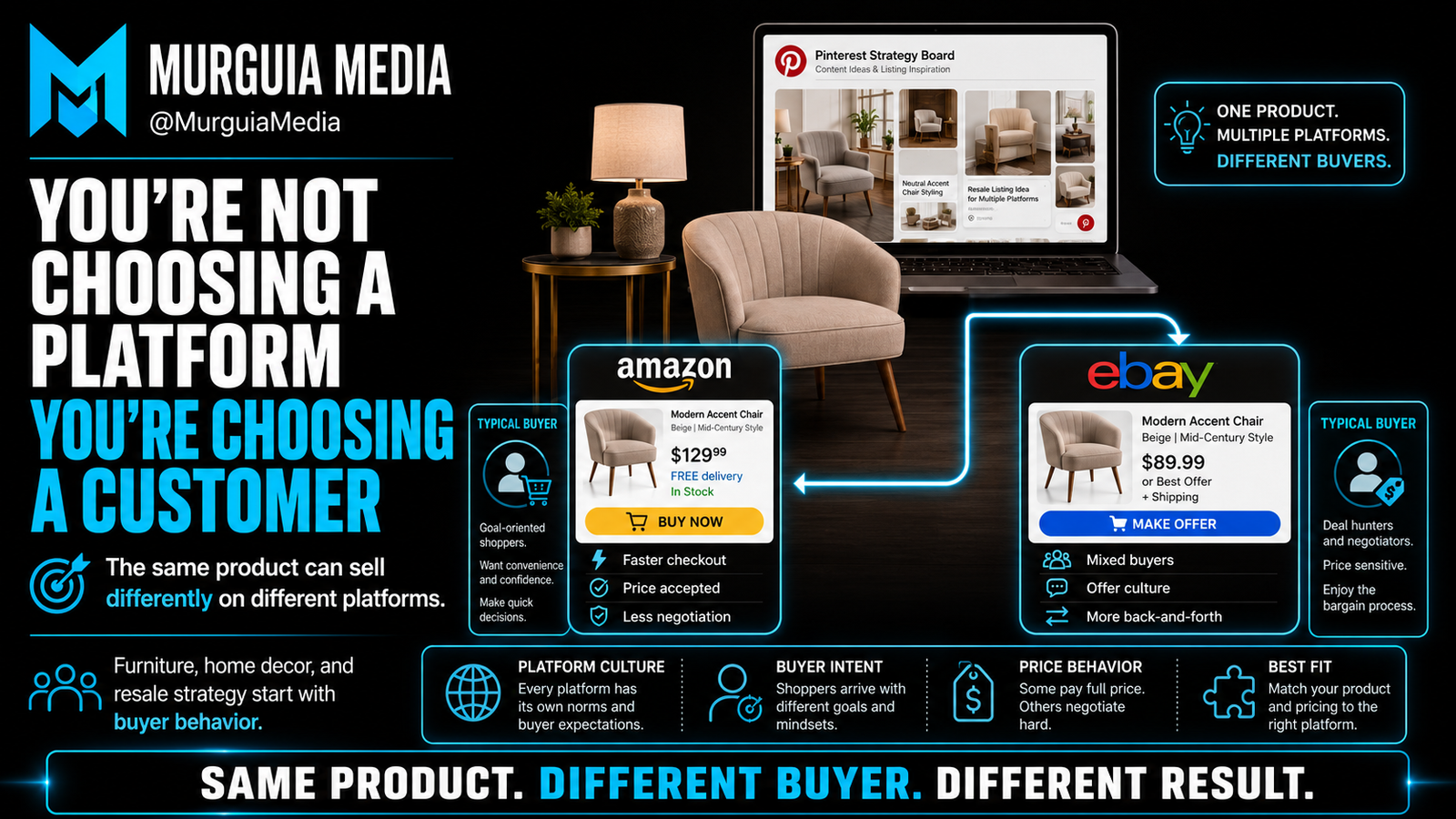
I sell furniture, home decor, and honestly, anything I find at a genuine discount that’s in new condition. And one thing I learned fast: the same item can perform completely differently depending on which platform it’s listed on, because you’re not really choosing a platform — you’re choosing a customer.
Different Platforms Mean Different Buyers, Not Just Different Rules
eBay and Amazon are a good example of how different this gets, even though on paper they seem similar. Amazon buyers, in my experience, skew more white collar. They’re trained to see the price on the screen and accept it — there’s no haggling culture there, which honestly makes selling a lot smoother. eBay’s audience is more of a mix, blue collar and white collar together, and they come in expecting to negotiate. They’ll hustle you a little, and that’s just part of that platform’s culture.
That difference alone should shape where you put a given item, not just what fees each platform charges.
Know the Real Cost of Selling Somewhere Before You List
Fees matter more than people think, especially on bigger-ticket items. I won’t sell furniture on Amazon at all, because between the fee structure and how many other sellers are already offering the same manufacturer’s pieces there, the margin isn’t worth it. eBay, even with competition, lets me keep a lot more of what I actually sell something for.
Do the math before you commit a product to a platform. A fee that seems small on a $30 item can quietly wipe out your entire profit on a $1,000 one.
Not Every Category Belongs Everywhere
Some categories come with real restrictions you need to know about before you try to list. Amazon, for certain categories like makeup, requires proof that you’re actually authorized to sell that brand — you can’t just source it and list it. Food and grocery categories have gotten more restrictive too, with tighter rules on pricing and what’s even allowed. I’ve sold in that category before, and it’s simply more work to stay compliant than most other categories.
Know these restrictions before you build inventory around a category, not after.
Where This Leaves You
Before you list anything, stop and ask: who actually buys on this platform, and does that match who wants what I’m selling? A dining table isn’t a dining table everywhere — it’s a different sale, to a different person, at a different price, depending on where it lands. Learn your platforms like you’d learn your customers, because that’s really what they are.
Next in this series: how I actually decide what to charge for the same item across different platforms — and why the number isn’t the same everywhere, on purpose.