Platform Monetization vs. Affiliate Marketing: Which One Should Creators Choose?
Platform payments and affiliate commissions are two different ways to earn from content. Understanding how each model works can help creators build a stronger income strategy without depending entirely on one platform, company, or algorithm.
By Laura Murguia
Creators often use the word “monetization” as though it describes one single method of earning money online. It does not.
A creator earning advertising revenue from YouTube is using a different business model from someone earning a commission through an affiliate recommendation. A Facebook creator receiving performance-based payments is not being compensated in the same way as a blogger who recommends a product and receives a percentage of a qualifying sale.
Both methods can produce income, but they require different strategies. They also come with different requirements, limitations, and levels of control.
Understanding the difference helps creators decide where to invest their time, what kind of content to create, and how to avoid building an entire business around only one source of revenue.
What Is Platform Monetization?
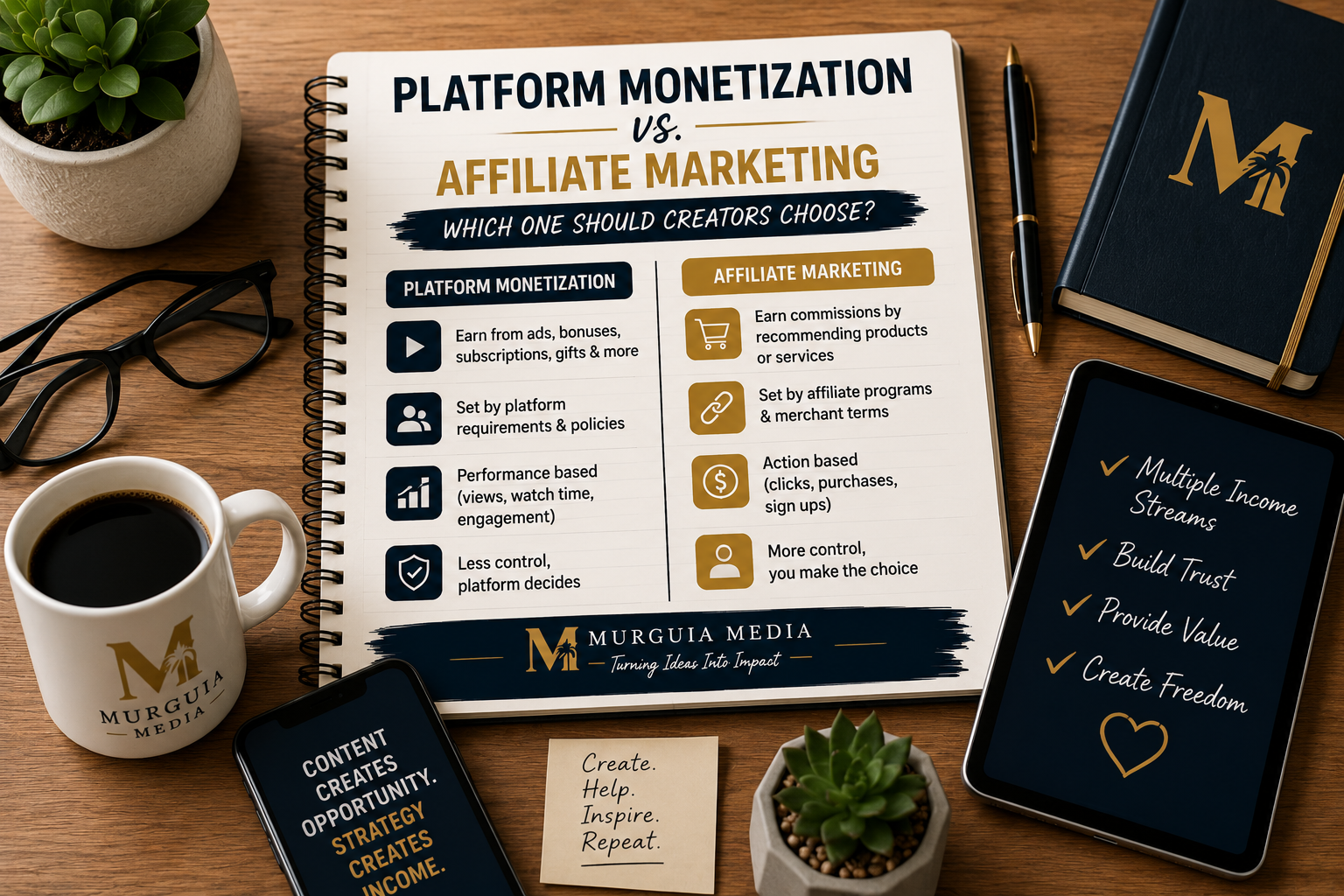
Platform monetization happens when a social media platform pays an eligible creator through one of its own programs. Depending on the platform and account, that may include advertising revenue, subscriptions, gifts, bonuses, Stars, shopping tools, or performance-based content payments.
The creator publishes content. The platform distributes that content and determines whether the account, audience, location, and material qualify for the monetization features it offers.
The greatest advantage is convenience. Once a creator qualifies and activates the appropriate program, eligible content may begin generating revenue without the creator having to sell a separate product in every post.
The disadvantage is control. The platform establishes the requirements, calculates eligible activity, enforces the policies, and decides whether the feature remains available.
A creator may reach a follower or watch-time threshold and still undergo a full policy review. A program may also be invitation-only, restricted by location, or unavailable to a particular account.
Even after approval, platform revenue can vary significantly from month to month.
What Is Affiliate Marketing?
Affiliate marketing works differently. The creator recommends a product, service, or company using a specially tracked link. When a reader completes a qualifying purchase or action, the creator may earn a commission.
The company or affiliate network determines the program rules, commission rate, tracking period, approved promotional methods, and payment requirements.
Affiliate income is connected to action rather than views alone. A piece of content may receive modest traffic but still produce income if it reaches people who are actively searching for a solution.
For example, an article titled “The Editing Tools I Use to Create Reels” may never become viral. However, the people reading it are already interested in editing tools. If the article explains the options honestly and includes a relevant recommendation, some readers may decide to purchase.
The content succeeds because it reaches people with a specific need.
The Main Difference Is Where the Control Lives
With platform monetization, the platform controls most of the system. It decides who qualifies, what content is eligible, how revenue is calculated, which features are available, and whether the creator remains in the program.
With affiliate marketing, the creator has more control over where recommendations appear and how they are presented. However, the creator still depends on the affiliate company’s approval, tracking system, commission structure, and payment terms.
Neither model gives the creator complete independence.
A platform can change its requirements. An affiliate program can lower its commission. A brand can close a program. A social media account can lose reach.
That is why relying on only one source of income creates risk. A balanced strategy gives the creator more than one way to earn.
Platform Income Usually Rewards Content Performance
Platform monetization generally depends on eligible content activity. That may include views, watch time, viewer location, subscriptions, engagement, gifts, advertising demand, or other performance signals.
A creator can publish excellent content and still earn very little if the audience is small, the content is not eligible, or the platform does not place valuable advertising around it.
Platform revenue is often strongest when the creator has a large collection of content that continues attracting viewers over time.
This is one reason YouTube can become valuable for creators who publish searchable tutorials, educational videos, prayers, interviews, reviews, or long-form explanations. A useful video may continue attracting viewers for months or years.
The creator is no longer depending only on what happens during the first day after publication.
Affiliate Income Rewards Buying Intent
Affiliate marketing does not require every reader to make a purchase. It requires the right reader to find the right recommendation at the right time.
A broad entertainment post may attract thousands of views without creating a single sale. A smaller article answering a direct question may attract fewer readers but produce more income because those readers are already considering a purchase.
Someone reading an article about improving phone-video lighting may already be interested in a tripod, microphone, or ring light. Someone reading a room-styling guide may already be considering furniture, rugs, or decorative accessories.
The recommendation fits the reason the person came to the content.
That is buying intent.
Trust Matters More Than Volume
Affiliate marketing fails when creators promote products they do not understand, do not use, or would never recommend without compensation. An audience quickly notices when every subject becomes an excuse to insert a sales link.
A helpful recommendation should explain why the product is relevant, who it may be appropriate for, and what limitations the customer should understand.
Honest limitations do not weaken a recommendation. They strengthen it.
A creator might explain that an inexpensive editing tool is useful for beginners but lacks features an experienced creator may eventually need. That type of honesty helps the reader make a better decision and protects the creator’s credibility.
Trust is more valuable than one rushed commission.
Disclosure Is Part of the Responsibility
When a creator has a financial or material relationship with a company, that relationship should be disclosed clearly. The disclosure should be easy to notice and understand.
It should not be hidden at the bottom of a long page, buried behind vague language, or left for the audience to guess.
A simple disclosure may say:
This article may contain affiliate links. Murguia Media may earn a commission from qualifying purchases at no additional cost to the reader.
Sponsored posts, gifted products, and paid partnerships also require appropriate disclosure.
Transparency allows readers to understand the relationship without preventing the creator from earning.
Platform Monetization Can Be More Passive but Less Predictable
Once a platform approves a creator, eligible content may generate revenue without requiring the creator to make a direct sale. That can make platform income feel more passive.
However, it is not necessarily predictable.
Advertising rates can change. Viewer location can affect revenue. A platform may adjust its payment system. Content that performs well one month may earn much less the next.
Creators should avoid assuming that one successful month represents permanent income.
Platform revenue can be valuable, but it should be treated as part of a larger business rather than as a guaranteed salary.
Affiliate Marketing Requires More Strategy
Affiliate income often requires more deliberate planning. The creator needs to understand what the audience is looking for, which products are relevant, where recommendations should appear, and how to explain the value honestly.
An affiliate link placed randomly inside unrelated content is unlikely to perform well.
The strongest affiliate content usually answers a real question. It may compare products, demonstrate a tool, explain how something works, show how it fits into a process, or describe who should and should not purchase it.
The creator is not simply placing a link. The creator is helping the reader make a decision.
Which Model Is Better?
Neither model is automatically better.
Platform monetization may be more appropriate for a creator who consistently attracts large numbers of viewers and produces content that remains eligible for revenue.
Affiliate marketing may be more appropriate for a creator whose audience regularly asks for product recommendations, tools, resources, or purchasing guidance.
Some content categories naturally support one model more strongly than another. Entertainment and general inspiration may depend more heavily on platform revenue, sponsorships, memberships, or fan support.
Technology, beauty, home décor, education, business, and product-focused subjects may have stronger affiliate opportunities because the audience often seeks specific solutions.
The creator’s audience, topic, platform, and content format all matter.
The Strongest Strategy Uses More Than One Path
A creator does not have to choose one income model forever.
One YouTube tutorial may generate platform advertising revenue while also including a relevant affiliate recommendation. A Facebook post may lead readers to a blog article containing a properly disclosed affiliate link.
An Instagram Reel may demonstrate a creator’s skill and attract a company interested in purchasing original content. A blog article may build search traffic, grow an email list, introduce a digital product, and support an affiliate recommendation.
The content remains useful, but it participates in a larger income system.
This is the difference between creating isolated posts and building a business.
A Website Gives the Creator More Control
Social media platforms are useful for discovery and community, but the creator does not own them.
A website provides a permanent place for articles, recommendations, services, disclosures, and products. It also allows the creator to organize content around the questions readers are already asking.
A social media post may disappear quickly inside a feed. A useful website article can continue appearing in search results and attracting readers over time.
A website also gives the creator enough space to explain recommendations fully instead of trying to fit everything into one caption or short video.
The combination of social media and a website can make both platform and affiliate strategies stronger.
Build the Audience Relationship First
Platform monetization and affiliate marketing both depend on trust.
A platform may pay for eligible performance, but people still need a reason to watch. An affiliate program may provide a tracking link, but people still need a reason to believe the recommendation.
The strongest creators do not begin every piece of content by asking, “How can I make money from this?”
They begin by asking, “What does my audience need from me?”
The income strategy comes after the value is clear.
Platform monetization can reward the attention you build. Affiliate marketing can reward the decisions you help people make.
A sustainable creator business understands how to use both without allowing either one to replace honesty, usefulness, or trust.